The Narayani River
Two great Himalayan rivers meet at Devghat and carry on as one. Here's the Narayani's story, from that meeting point all the way to the Indian border, and the places along it you can easily reach in a day.

Every river has to start somewhere, and the Narayani starts in style. It's born at Devghat, a few kilometres upstream of Bharatpur, where two of Nepal's mightiest rivers finally meet. The Kali Gandaki arrives having carved its way right through the Himalaya, between the Annapurna and Dhaulagiri massifs. The Trishuli arrives from the other direction, having set off in Tibet and tumbled down past Langtang. What flows away from the confluence is one of the largest rivers in Nepal, and it's often said to be the country's deepest.
From Devghat, the river heads south past Narayangadh, the riverside half of Bharatpur city, before bending away to the south-west. For most of the rest of its journey through Nepal, it has the forests of Chitwan on one bank and the farms and villages of Nawalpur on the other. It finally leaves the country at Tribeni and carries on across the plains of India as the Gandak, eventually joining the Ganges near Patna.
How the river changes through the year
- October to February: low, cold and wonderfully clear, running green over the gravel. Sandbanks appear, and winter birds fly in from the north.
- March to May: the lowest water of the year and the warmest days. Long beaches of sand and pebbles line the bends.
- June to September: the monsoon fills the river from bank to bank, and it runs fast and brown with silt washed down from the mountains.
Places along the river
Devghat
The confluence itself, with its temples, ashrams and a long footbridge across the water. Find out more about Devghat.
Narayangadh
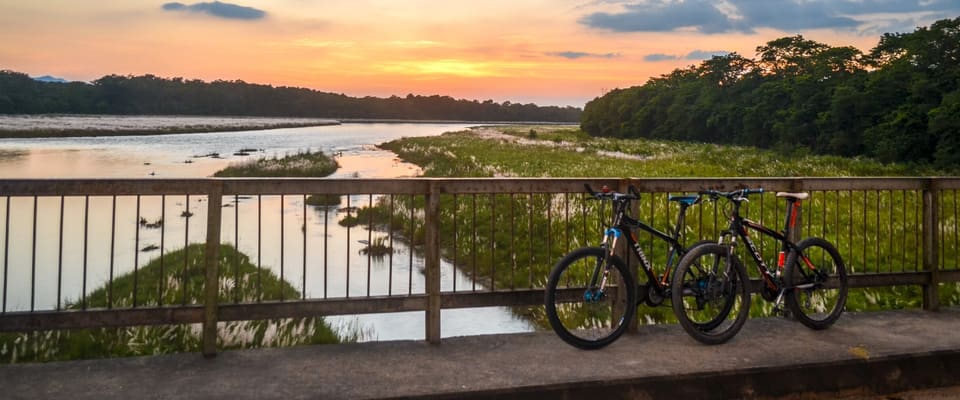
The city's waterfront, with the road bridge, riverside paths and tea stalls. Come evening, it can feel as if half of Bharatpur has wandered down to the water.
Bis Hajari Tal
Not on the river itself, but part of the same lowland: a cluster of forest lakes south-east of the city. Find out more about Bis Hajari Tal.
Amaltari
A village of Tharu and Bote families on the Nawalpur bank. The Bote have fished the Narayani and ferried people across it for generations. Find out more about Amaltari.
Tribeni
The river's final stretch in Nepal, where it reaches the border with India.
Life in the river
The Narayani is one of only two rivers in Nepal where the gharial, a slender-snouted, fish-eating crocodile, still breeds in the wild. You can read all about it on our river wildlife page.
Questions
Where does the Narayani River start?
At Devghat, where the Kali Gandaki and the Trishuli meet, right on the border between Chitwan and Tanahun districts.
What is the Narayani called in India?
The Gandak. It flows across the state of Bihar and joins the Ganges near Patna.
Can you swim in the Narayani?
We'd really rather you didn't. The current is strong, the water is cold for much of the year, and crocodiles live in the lower river.
Does the Narayani flood?
Yes, during the monsoon, from late June to September. The river can rise by several metres in a single day, and the riverside paths are sometimes closed.
Trips that go there
Devghat, Narayangadh and the riverbank
Narayani River Day Tour
The whole river story in a single day: the Devghat confluence in the morning, a riverbank bird walk and lunch in the afternoon, and dusk on the Narayangadh waterfront.
from US$65per person
Narayangadh waterfront
Riverside Evening Ride
An easy bike ride along the Narayani waterfront and through riverside villages, with stops for street snacks, ending at dusk on the riverbank.
from US$30per person
Amaltari community homestay
A Night by the Narayani
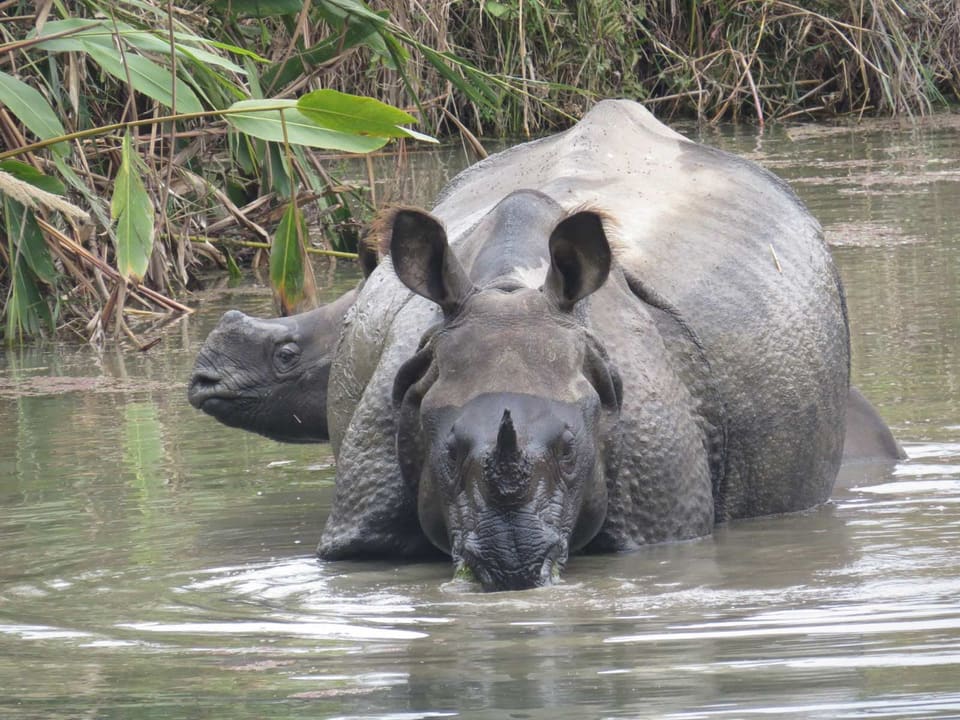
An afternoon and a night with a family at the Amaltari homestay: the river at dusk, a village dance, an early morning on the water, and the drive back the next day.
from US$120per person

