Wildlife of the Narayani
The creatures that depend on the river itself, from Nepal's rarest crocodile to the birds of its sandbars.

Most of what's written about wildlife in this part of Nepal is about the forest. This page is about the river instead: the animals that live in the Narayani, or that couldn't do without its banks.
Gharial
The gharial is a crocodile with a long, thin snout full of fine teeth, perfectly designed for catching fish. It's critically endangered worldwide. In Nepal, it survives mainly in two rivers, the Narayani and the Rapti, with a handful in rivers further west.
The national count in December 2025 found 135 gharial in the Narayani and 231 in the Rapti, 366 in total. Numbers in the Narayani have been slowly falling, and the Rapti has become their main home. Fishing nets, sand and gravel mining, and pollution are the biggest threats they face.
In March 2026, a gharial was spotted basking on a sandbar just downstream of Devghat, the first seen there in some 30 years (Kathmandu Post). Sightings this close to the city are still rare, but it's a hopeful sign.
Mugger crocodile
The mugger, or marsh crocodile, is broader and heavier than the gharial and will eat almost anything. It prefers still water: oxbow lakes, side channels and wetlands such as Bis Hajari Tal.
Smooth-coated otter
Otters are now and then reported on the quieter stretches of the river and in the wetlands. They're shy creatures and are usually seen early in the morning.
River birds
The banks and sandbars are a wonderful place to see:
- River lapwing and small pratincole on the stones.
- River tern skimming low over the water.
- Ruddy shelduck and other ducks from November to February.
- Ospreys and fish eagles.
- Great egret and other herons wading in the shallows.
- Lesser adjutant, a large stork of the wetlands.
Watching wildlife responsibly
- Keep well back from crocodiles on land.
- Never feed or approach any animal.
- Take all your litter away with you. Plastic in the river harms the fish and the birds that eat them.
Questions
Where is the best place to see gharial?
On sunny winter mornings, gharial bask on the sandbanks of the lower Narayani and the Rapti. They're shy, though, so no trip can promise you a sighting.
Are gharial dangerous to people?
They're not known to attack people; their jaws are made for fish. Muggers are a different story, so keep your distance from both.
Trips that go there
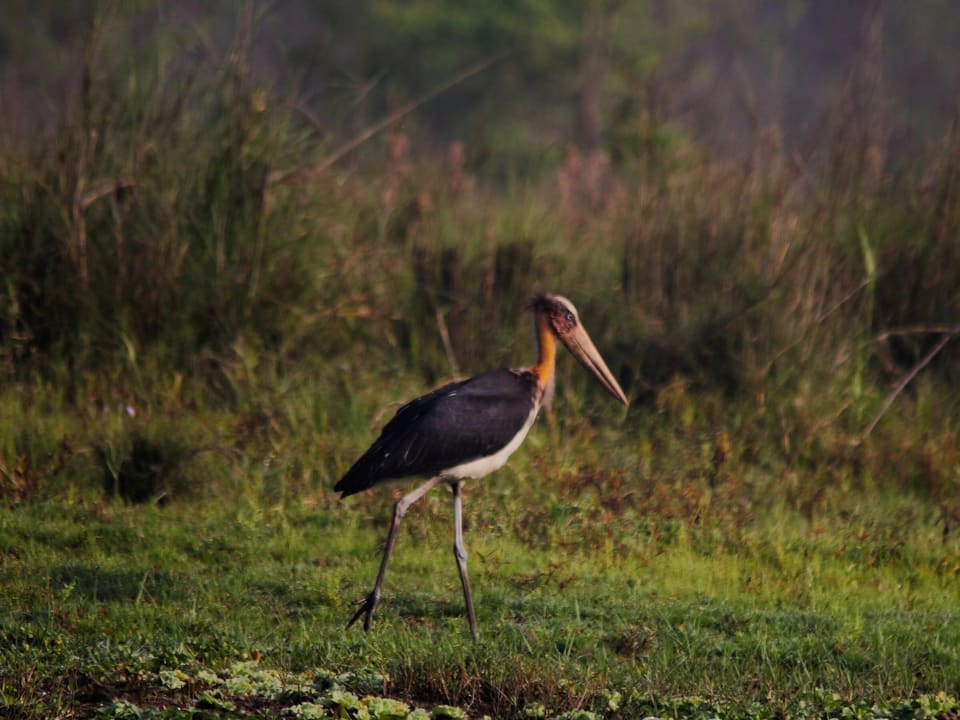
Bis Hajari Tal, Barandabhar forest
Bis Hajari Tal Wetland Walk
A guided morning walk around the forest lakes of Bis Hajari Tal, a Ramsar-listed wetland near Bharatpur, looking for herons, storks, kingfishers and winter ducks.
from US$40per person
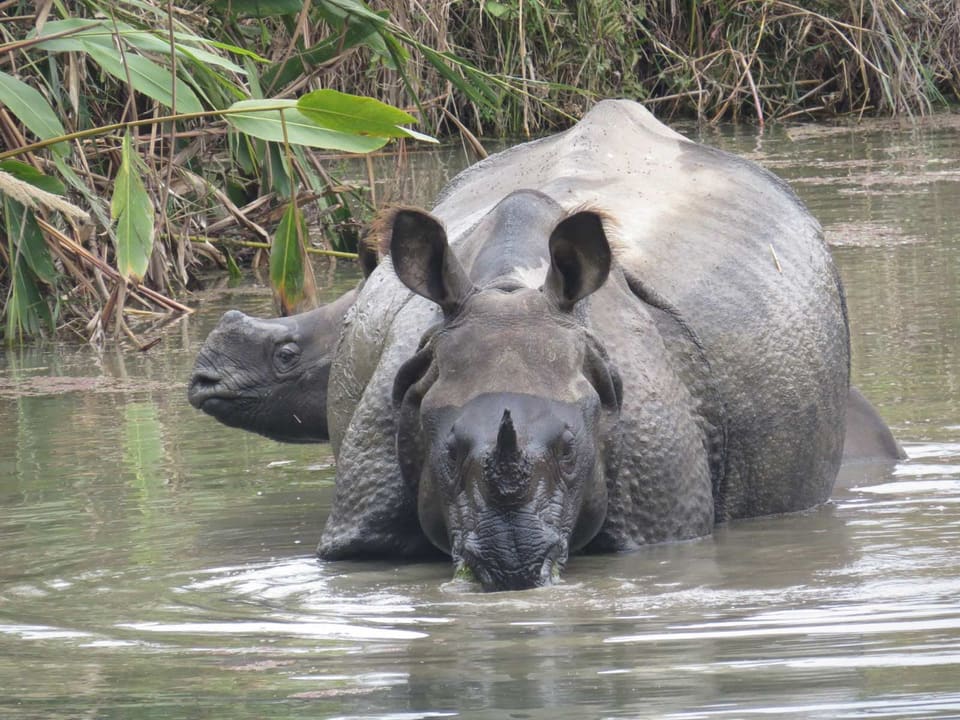
Amaltari community homestay
A Night by the Narayani
An afternoon and a night with a family at the Amaltari homestay: the river at dusk, a village dance, an early morning on the water, and the drive back the next day.
from US$120per person
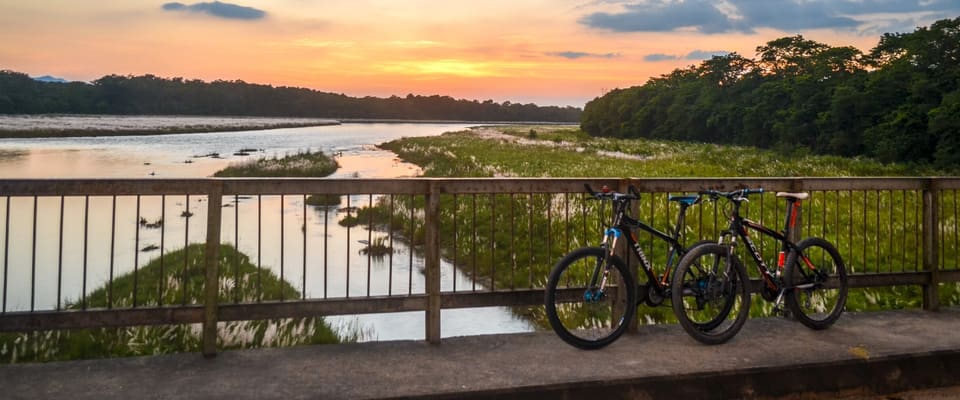
Devghat, Narayangadh and the riverbank
Narayani River Day Tour
The whole river story in a single day: the Devghat confluence in the morning, a riverbank bird walk and lunch in the afternoon, and dusk on the Narayangadh waterfront.
from US$65per person


